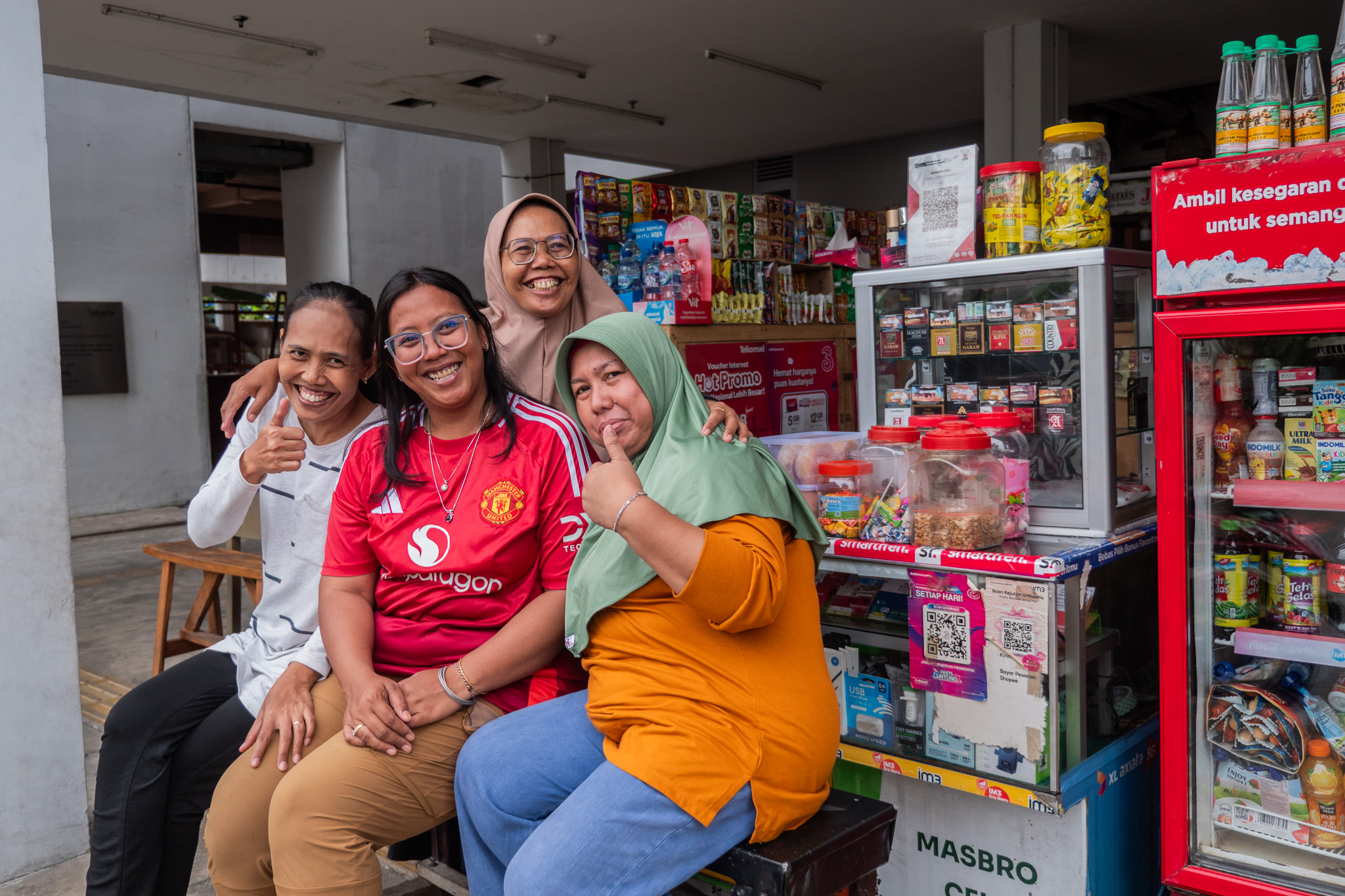
The urban poor communities in Indonesia are increasing their agency, participating in decision-making, and gaining better access to resources.
Despite rapid economic growth, inadequate urban planning continues to cause serious problems regarding access to adequate housing in Indonesia.
In this context, participatory housing initiatives, such as housing cooperatives, offer an opportunity for urban poor communities to access adequate housing. By emphasizing resource pooling, providing anti-speculation solutions, and implementing shared management systems, these models ensure affordable, safe, and sustainable housing while strengthening residents’ resilience and agency. Housing cooperatives present a real opportunity for these communities and require the establishment of appropriate legal frameworks and support mechanisms to ensure their development.
Local partner: Urban Poor Consortium
The Urban Poor Consortium (UPC) has played a key role in the growth of housing cooperatives in Jakarta over the past five years. UPC helps communities organize and come together, supports them through the process of registering as cooperatives, provides training, conducts regular follow-ups, amplifies the cooperatives’ advocacy, and connects them with each other as well as with other city partners. This project aims to strengthen this model by building a national movement of housing cooperatives for low-income communities and ensuring the establishment of a national legal framework and appropriate support tools, so that residents can become the central actors in the planning, construction, and management of their housing.
Activities
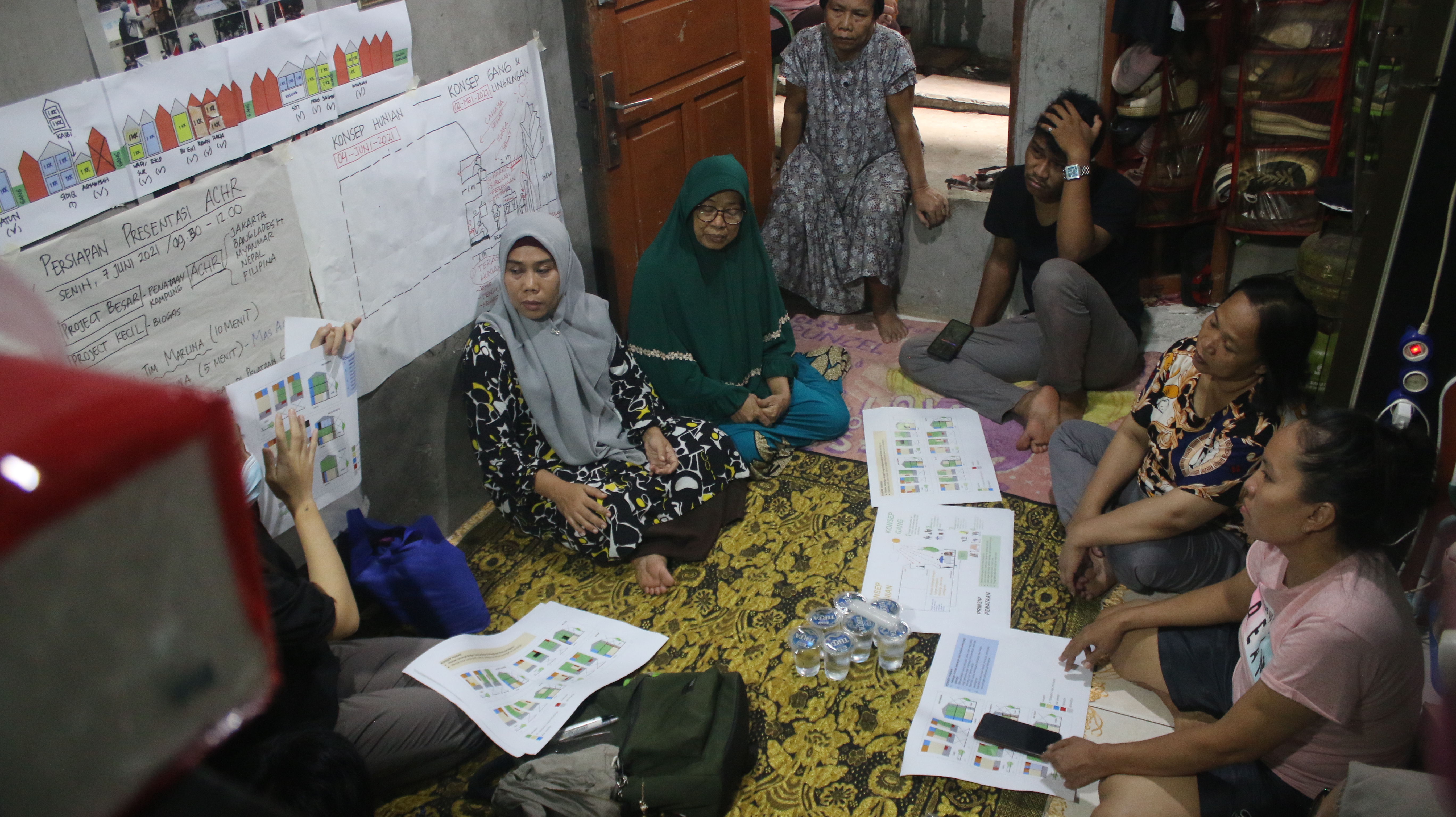
Community Organisation and Network Building
- Mapping of Informal Settlements/Neighbourhoods in 7 Cities
- Building Networks of Housing Cooperatives at City and National Levels
Capacity Building for Urban Poor Communities
- Training of housing cooperative managers in each of the 7 cities
- Organising 5 peer-to-peer visits between cooperatives within each city
- Organising 6 peer exchanges between cities
- Participating in a regional training on participatory housing organised by ACHR
Advocacy
- Organising 2 hybrid workshops and 2 webinars to draft the participatory housing policy concept
- Meeting with national government representatives to present recommendations on urban land reform policy
- Organising public exhibitions of community action plans in each of the 7 cities
Institutional Strengthening
- Organising UPC’s archive database to strengthen advocacy and fundraising
- Updating UPC’s website and translating key sections into English
- Conducting monthly follow-ups at both city and national levels in collaboration with local community organisations
Direct and Indirect Beneficiaries
The project directly benefits
- 15 members of UPC
- 900 individuals from urban poor communities participating in training sessions and experience-sharing exchanges
- 1,400 other individuals from urban poor communities organised in housing cooperatives, who will serve as pilot projects in the seven cities (at least 50% of the beneficiaries are women)
Indirectly, the project will benefit all other communities in informal settlements across the 7 targeted cities.