As part of its projects supported by the Fondation pour le Logement (FLD), urbaMonde was invited to attend an in-person meeting in Paris. On 27, 28 and 29 January 2026, our project managers, Bénédicte and Alessia, took part in the seminar entitled ‘A shared vision for a successful decent housing project by 2035’, organised by the FLD and CRAterre.
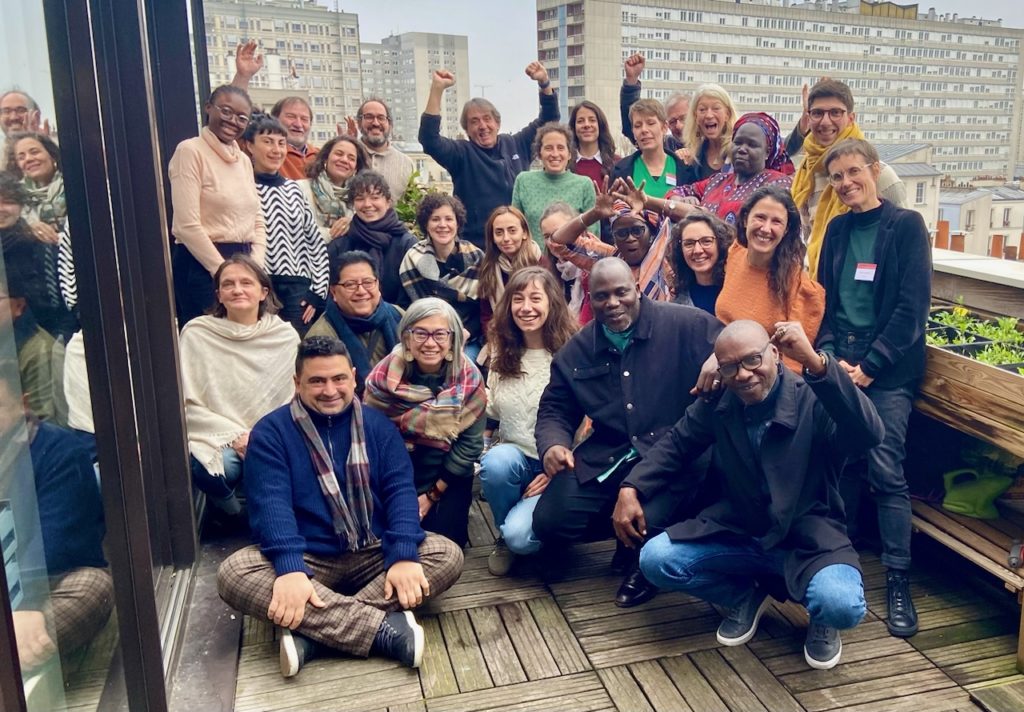
This seminar formed part of a wider process, carried out over the preceding months through a series of webinars organised within the framework of the Housing Learning Lab community of practice. On this occasion, the FLD’s partner organisations, with the support of the CRAterre team, engaged in a collective reflection on housing issues and practices in international cooperation projects. The Paris meeting was a key opportunity to take stock of these discussions and build on the work already undertaken.
Over the course of three days, more than a dozen organisations came together to make progress on formulating a shared vision to guide their day-to-day practices. The aim was to jointly develop a shared definition of decent housing by 2035 and identify the changes needed to achieve it.
The discussions focused on three main themes: localisation, climate change and gender inequalities. The first day of the seminar was devoted to identifying shared resources to serve as a basis for discussion. The second day provided an opportunity to explore the issue of gender inequalities in housing in greater depth, with the support of the F3E team, in order to better understand these challenges and identify concrete avenues for progress. Finally, the third day was dedicated to consolidating the shared vision and to an initial discussion on the tools needed for its implementation.
The seminar combined small-group work with presentations of practices and tools (‘flash-tools’), illustrating a range of methods that can be used at different stages of cooperation projects. This dynamic activity enabled participants to discover practical methods developed by other organisations, such as the Participatory Gender Assessment, presented by Habitat-Cité. urbaMonde presented the CoHabitat Network and the Revolving Fund for Urban Renewal, as well as the Senegalese Federation of Residents (FSH), in partnership with the organisation urbaSEN.
The discussions highlighted several concrete directions for future projects: strengthening collaboration and partnerships among stakeholders, promoting knowledge sharing, challenging power dynamics, prioritising place-based approaches tailored to local contexts, and systematically integrating gender equality and climate issues into practice.
The work already underway will continue in the coming months through remote discussions and the formalisation of a shared vision for decent housing by 2035. This process will also help to identify the changes needed to current practices, as well as the indicators required to monitor progress.
At a time when international cooperation and solidarity are under strain, these three days provided a significant boost and marked a step forward. They served as a reminder that many organisations face similar challenges and that pooling resources and experiences is essential to addressing them.
Finally, the face-to-face meetings provided a key opportunity to strengthen ties between partners who usually collaborate remotely and to coordinate efforts around common goals. These exchanges also helped to give greater meaning to our collective work and to confirm that everyone’s contributions form part of a shared and concrete vision.
