What a week of international exchange in Senegal taught us about solidarity, housing, and collective action
At the end of April 2026, urbaMonde and urbaSEN gathered together grassroots leaders, community organisers, and support NGOs from across Latin America, Asia, and Africa for a week of international exchange in Senegal with field visits and peer learning centred on one urgent global challenge: how communities can collectively shape more just, sustainable, and inclusive cities.
Bringing together representatives from nine grassroots organisations and networks spanning Nicaragua, Brazil, Uruguay, Nepal, Indonesia, the Philippines, Bangladesh, Benin, and Senegal, this international learning visit in Dakar was built on a simple but powerful belief: when communities facing similar struggles across different regions come together, they do more than exchange ideas – they strengthen one another’s capacity to act.
Why Senegal?
Across the Global South, housing has increasingly become a site of exclusion. Financial speculation, rising urban inequality, climate vulnerability, and limited institutional support continue to push millions into precarious living conditions. Yet in this context, community-led housing offers another path: one rooted in collective organisation, democratic governance, local knowledge, and solidarity.
Senegal, and particularly the work of urbaSEN and the Senegalese Federation of Inhabitants (FSH), was collectively chosen by all partners as the destination for this visit because of the depth and maturity of their experience. For more than a decade, urbaSEN and FSH have developed innovative, community-driven responses to flood risks, inadequate housing, financial exclusion, and environmental vulnerability in Dakar’s peri-urban neighbourhoods. Their work has shown that vulnerable communities are not passive recipients of aid – they are capable planners, builders, financiers, and decision-makers in transforming their own cities.
→ Learn more about the work of urbaSEN and FSH with this documentary and our project page.
Learning from practice: field visits across Dakar
Over seven days, participants took part in a rich program of exchange sessions, collective discussions, workshops, and field visits designed to bridge strategic reflection with direct, on-the-ground learning.
Cité FSH: an eco-neighborhood
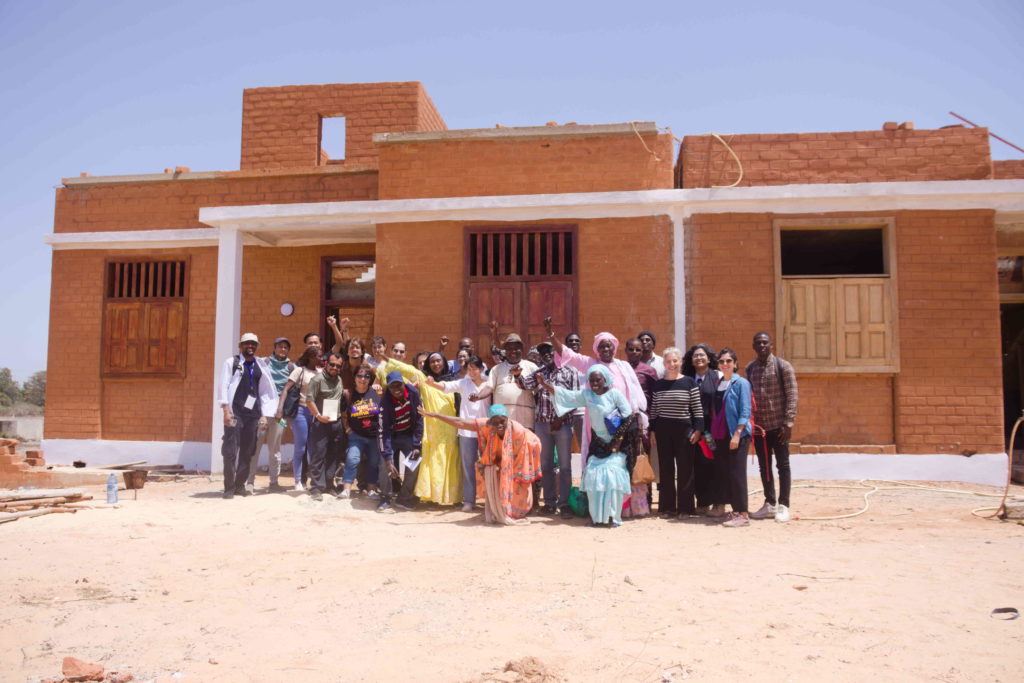
One of the key moments of the visit was the discovery of the Cité FSH, a pioneering eco-neighbourhood developed by the Senegalese Federation of Inhabitants and urbaSEN to respond to the pressing housing needs of FSH members. More than a housing project, the Cité FSH embodies a broader vision of community-led urban transformation, combining affordable housing, sustainable construction, locally sourced materials, and climate-responsive planning. For many participants, witnessing this project firsthand was a powerful reminder that collective organisation can generate concrete, scalable alternatives for vulnerable populations, particularly women-led communities.
The Revolving Fund for Urban Renewal
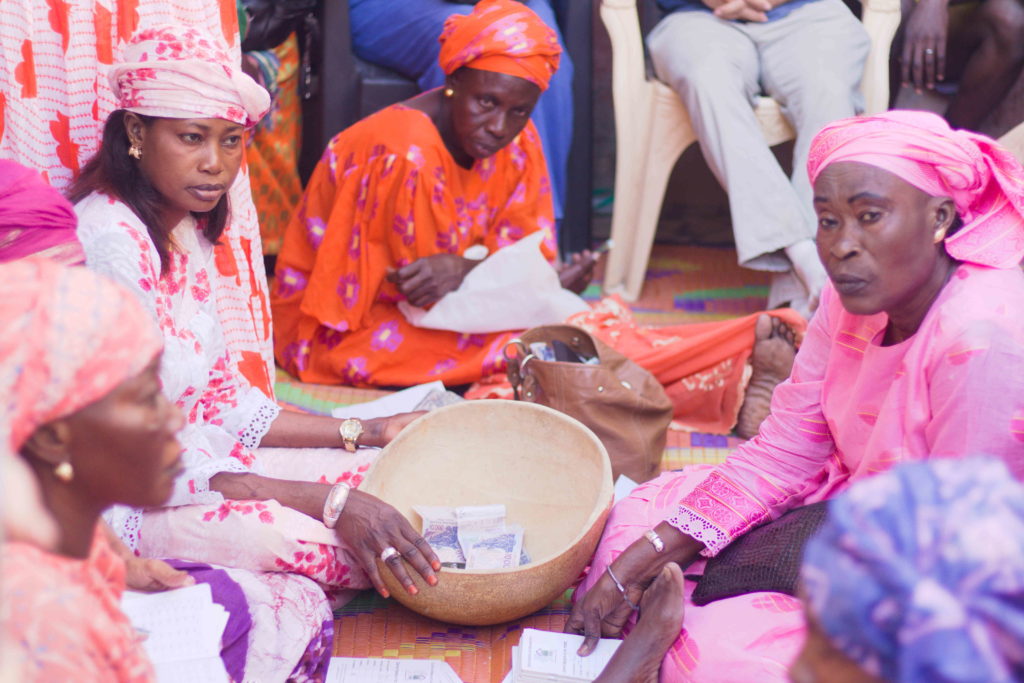
A major highlight of the week was the opportunity for participants to engage directly with FSH savings groups – the grassroots foundation of the Revolving Fund for Urban Renewal. By taking part in savings group meetings and exchanging firsthand with group members and community leaders, participants were able to move beyond theory and gain a detailed understanding of how this community-led financial mechanism functions in everyday practice.
These moments offered rare insight into the collective processes that sustain the revolving fund: how savings are mobilised, how decisions are made, how trust and accountability are built, and how communities themselves manage and direct resources toward shared priorities. For many participants, these exchanges were among the most powerful experiences of the visit, precisely because they revealed that the strength of the revolving fund lies not only in financial tools but also in the social infrastructure behind it: collective organisation, democratic governance, and long-term solidarity.
Through presentations, practical demonstrations of tools such as urbaBase (a digital tool for managing the revolving fund), and direct participation in group meetings, participants explored how the Revolving Fund for Urban Renewal supports housing improvements, neighbourhood upgrading, women-led economic activities, and local infrastructure. More importantly, they saw how savings groups themselves create the foundation for these broader impacts: by organising residents, strengthening financial capacity, and creating systems through which communities can identify priorities, allocate resources, and act collectively. The revolving fund is not simply a source of financing, but a structure that connects savings, organisation, and local action.
Flood Risk Management
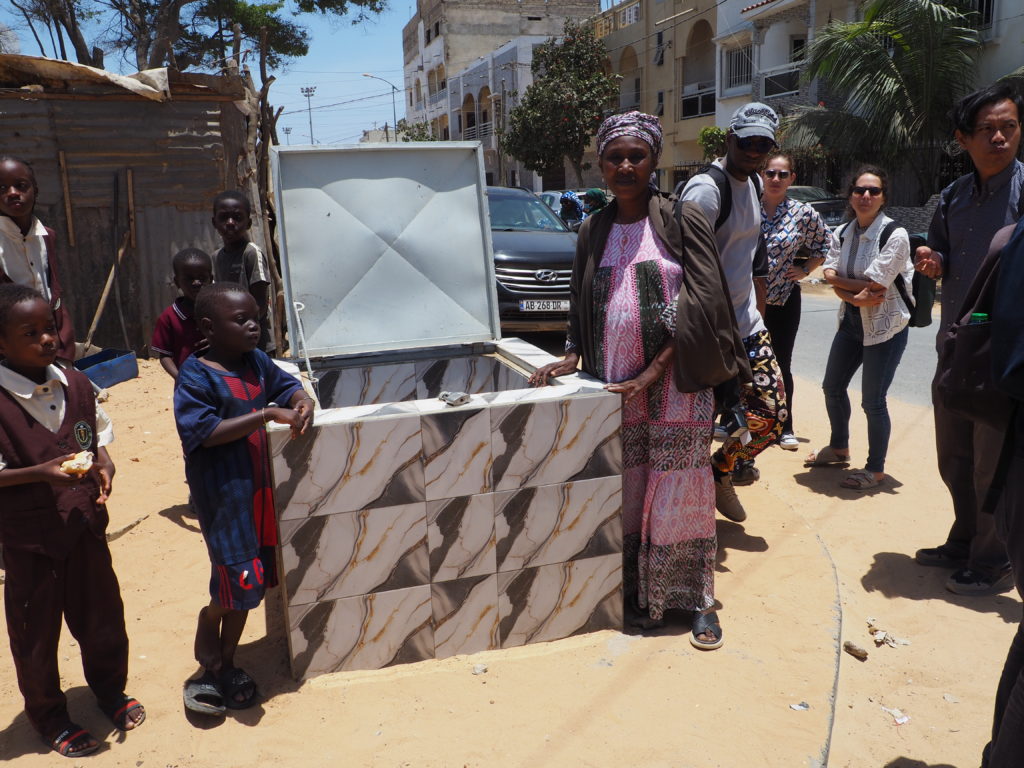
Participants also visited flood risk management projects implemented by FSH and urbaSEN in vulnerable neighbourhoods across Dakar. These visits provided an opportunity to engage directly with local neighbourhood management committees, to understand participatory planning processes, and to observe completed rehabilitation works, including upgraded homes and public infrastructure. These experiences offered practical examples of how community-led approaches can address both climate vulnerability and everyday living conditions in flood-prone areas.
Typha treatment and earth block production
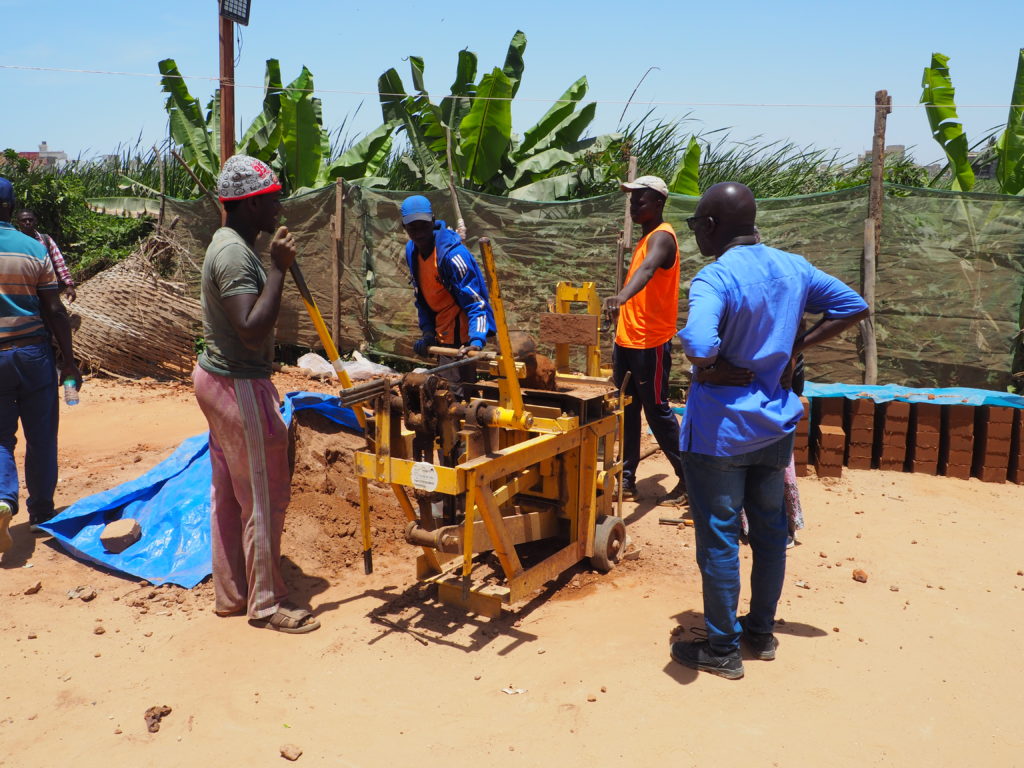
Another major highlight was the visit to the typha treatment and compressed earth block production centre, where participants explored how bio-based, locally available materials are being transformed into affordable, climate-adapted construction solutions. By engaging with these processes firsthand, participants gained a deeper understanding of how urbaSEN and FSH are linking environmental sustainability, local economic development, and adequate housing. These sessions sparked important discussions around ecological transition, cultural appropriateness, and the possibilities and limits of adapting such approaches to other regional contexts.
Together, these experiences made one thing clear: community-led housing is not a single project or tool, but an ecosystem of organisation, finance, technical innovation, and solidarity. Across Dakar, participants encountered living examples of how communities can collectively shape safer, more inclusive, and more sustainable urban futures.
Film screening evening
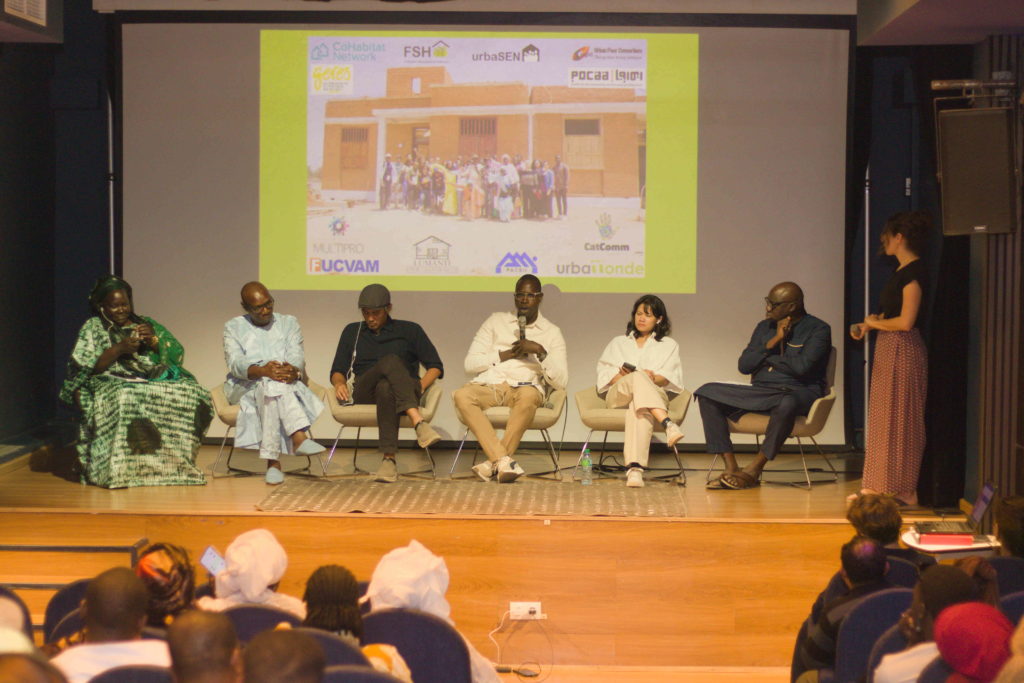
Towards the end of the week, urbaSEN and urbaMonde organised an international event at the Institut Français de Dakar. The event featured screenings of two urbaMonde documentaries highlighting community-led housing experiences in Senegal and Nicaragua, creating a powerful entry point for discussion grounded in concrete practice. These films created space for a panel that brought together representatives from Dakar’s public authorities, alongside grassroots leaders and international practitioners. Particularly impactful were the testimonies shared by FSH representatives and practitioners from Indonesia and the Philippines, whose reflections connected diverse local realities while underscoring common struggles around institutional support for community-led housing, climate vulnerability, and community organisation.
Beyond observation: Peer learning across continents
What makes such visits especially powerful is that they are never about “exporting” one model.
The exchange in Dakar created space for reciprocal dialogue between communities from diverse contexts — from flood-prone neighbourhoods in Dakar to informal settlements in Latin America and Asia. Through workshops, strategy sessions, and site visits, participants shared not only admiration but also critical reflections, practical tools, and questions about challenges related to institutional support, community mobilisation, the technical aspects of sustainable design and planning, data collection, and so on.
How can revolving funds work in other cultural & political contexts?
What makes eco-construction socially accepted and financially sustainable?
How can grassroots data systems strengthen local advocacy?
How do communities negotiate with authorities to achieve institutional support?
Discussing these questions within a diverse, multicultural group, all of whom are from the Global South, proved especially important. It enabled genuine mutual learning.
In the end, the visit not only allowed participants to deepen their understanding of what is being developed in Senegal but also enabled the local teams in Dakar to draw inspiration from practices emerging elsewhere in the world.
Building a global movement for community-led housing
Perhaps one of the most important outcomes of the week was less tangible, but deeply political: solidarity.
In a global context where local organisations often face underfunding, political marginalisation, or institutional indifference, coming together across borders matters. It reminds grassroots leaders that they are not isolated. That their struggles are interconnected. Housing justice, locally-led adaptation, and community-led development are not isolated local battles, but part of a broader global movement.
The visit was not an endpoint, but part of a longer process that urbaMonde and its local partners have been advancing over the past decade: knowledge exchange and mutual learning to support, give visibility to, and inform local practices. Each participating organisation will now translate lessons from Senegal into its own local context, adapting practices, strengthening advocacy, and expanding networks of solidarity. Reports, videos, and continued exchanges will ensure that the knowledge generated extends far beyond Dakar.
At a time when urban crises are intensifying globally, this kind of South-to-South exchange is an essential infrastructure for movement-building.
Throughout the week, one message resonated powerfully through the work of FSH:
Mbolo Moy Dole – Union makes strength.
In a world increasingly shaped by fragmentation and inequality, this reminder feels more urgent than ever: our strongest solutions may emerge not from isolation, but from communities learning, organising, and building together.
In the coming months, further exchanges will take place online, with regional webinars focusing on community-led financial mechanisms across Latin America, Africa, and Asia.
To stay informed and up to date about urbaMonde and its partners’ future exchanges, you can subscribe to our newsletter.
If you would like to support our work, you can become a member of urbaMonde France or urbaMonde Switzerland or you can make a donation to support our efforts.
