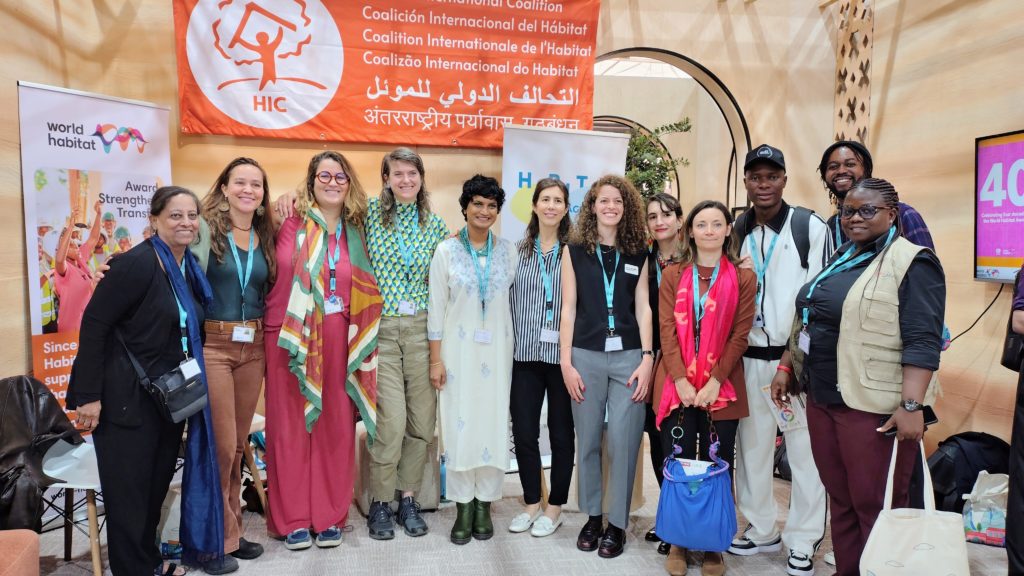
urbaMonde and the CoHabitat Network at WUF13 in Baku, Azerbaijan
From 18 to 21 May 2026, urbaMonde and members of the CoHabitat Network participated in the 13th World Urban Forum (WUF13) in Baku, Azerbaijan. Under the theme « Housing the World: Safe and Resilient Cities and Communities », the forum brought together governments, civil society organisations, researchers, practitioners, and community representatives to discuss solutions to the global housing crisis.
The Habitat Village: A Space for Exchange and Collective Action
A central meeting point for civil society at WUF13 was the Habitat Village, a collaborative space hosted within the Civil Society Cluster. Bringing together grassroots movements, researchers, housing practitioners, youth groups, and community leaders, the Habitat Village provided a vibrant platform for dialogue, networking, and collective reflection on the future of housing and cities.
Throughout the forum, participants engaged in discussions on the right to housing, community-led solutions, climate justice, communication and storytelling, and the role of new generations in defending habitat-related human rights. The initiative was made possible through the collaboration of a broad international coalition of organisations, including Habitat International Coalition, IIED, World Habitat, Rooftops Canada, MOBA Housing SCE, the Global Platform for the Right to the City, and Catalytic Communities, among many others.
For members of the CoHabitat Network, the Habitat Village served as both a meeting place and a platform to showcase practical experiences of community-led housing and cooperative development from around the world.
Community-Led Finance for Housing Justice
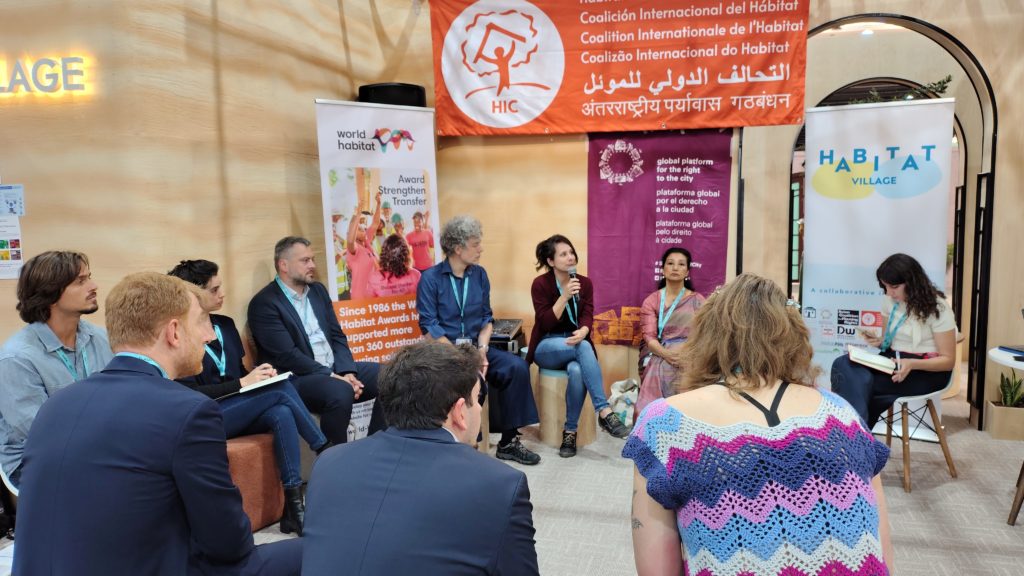
One of the first sessions involving urbaMonde took place on 19 May with the discussion « Community-led finance approaches to advance housing justice », organised by the International Institute for Environment and Development (IIED).
Representing urbaMonde, Bea Varnai contributed to a dialogue on how community-led finance mechanisms can address the housing crisis while advancing social and environmental justice. The session explored lessons from the recent report Community-led Finance for Adequate Housing and highlighted the important role of collective savings groups, community-driven philanthropy, and locally managed financial mechanisms in supporting housing solutions and informal settlement upgrading.
The discussion reinforced a key message shared across many WUF13 events: local communities are not merely beneficiaries of housing programmes but active financial actors capable of designing and managing sustainable solutions.
To learn more, read our publication “Community-led Finance for Adequate Housing”.
Housing Finance in a Shifting Funding Environment
On 20 May, urbaMonde participated in the networking event « Financing Housing in a Shifting Funding Environment – From ODA to Philanthropy and Local Funding Mechanisms. »
Bea Varnai joined an international panel alongside representatives from Habitat for Humanity International, IIED, the World Bank, Shelter and Settlements Alternatives, UN-Habitat Canada, and other housing practitioners.
The session addressed a growing concern within the housing sector: the significant reduction of Official Development Assistance (ODA) and the need to develop new financing pathways for adequate housing. Speakers explored how housing actors can strengthen local ownership, mobilise community-led finance, improve housing data systems, leverage philanthropic contributions, and develop blended finance approaches that combine public, private, and community resources.
The discussion highlighted the urgent need to ensure that housing remains central to international development agendas and to safeguard progress toward SDG 11 despite a rapidly changing funding landscape.
Strengthening Cooperative Housing Finance through the MOBA Accelerator
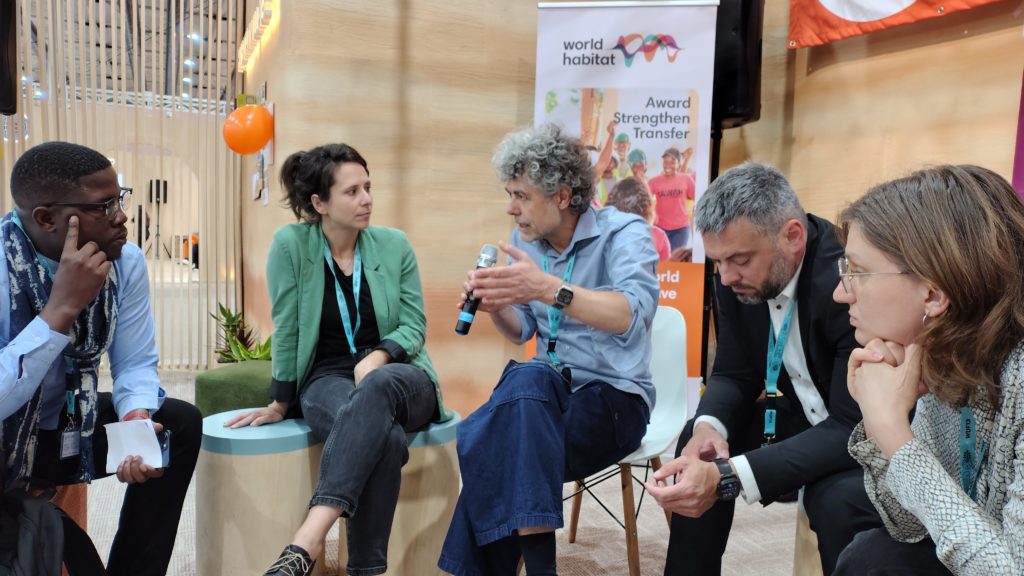
On 21 May, Bea Varnai moderated the session « The MOBA Accelerator – Building the Missing Piece in Cooperative Housing Finance. »
The session presented the MOBA Accelerator as an innovative response to one of the major barriers facing community-led and cooperative housing initiatives: access to long-term, affordable finance. Participants explored how cooperative finance mechanisms, strategic partnerships, and collective governance structures can create lasting housing affordability while strengthening urban resilience.
Particularly relevant in contexts where public housing systems remain limited and speculative pressures dominate housing markets, the discussion demonstrated how cooperative housing can provide a viable alternative that combines affordability, security, and democratic management.
Community-Led Housing Beyond Market-Driven Models
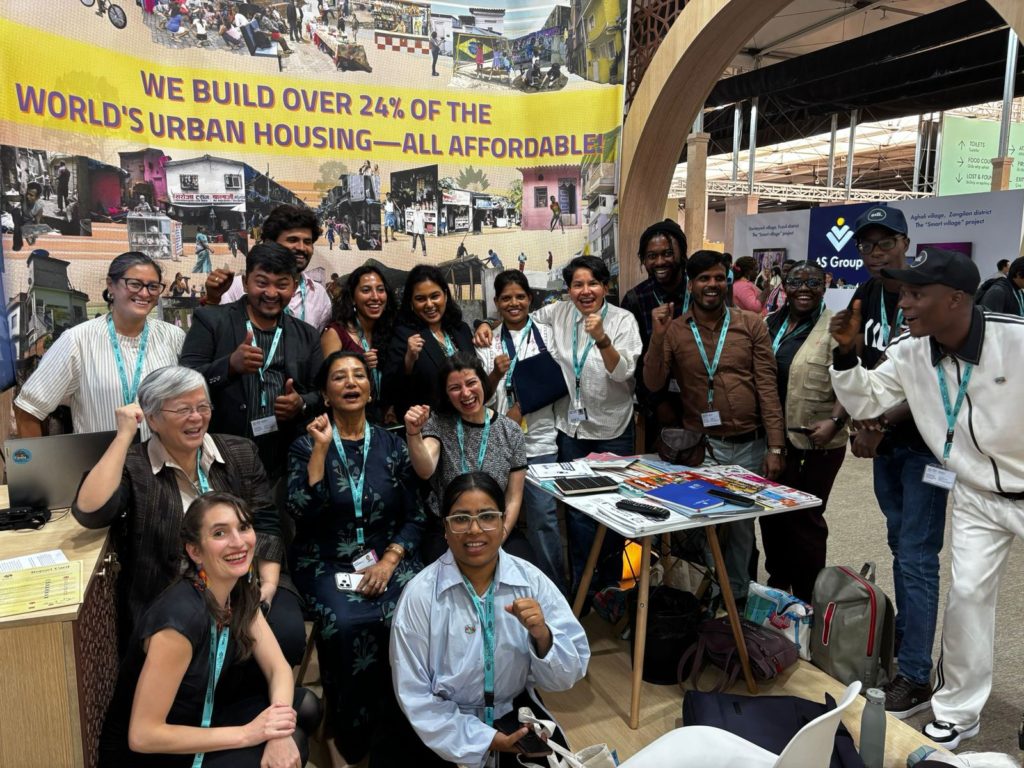
Beyond urbaMonde’s direct contributions, members of the CoHabitat Network participated in several key events throughout WUF13. These included discussions on lessons from forty years of the World Habitat Awards, community-led housing tools for European cities, and reflections on emerging cooperative housing movements across Europe’s semi-periphery.
Together, these sessions showcased the diversity of community-led housing approaches and reinforced the importance of international exchange. Experiences from Africa, Latin America, Europe, and Asia demonstrated that while contexts differ, common principles—collective action, democratic governance, solidarity-based finance, and local ownership—continue to offer effective responses to growing housing challenges.
The diversity of approaches was also reflected through the Favela Hub, coordinated by Catalytic Communities (CatComm), which created a dedicated space to amplify favela-based perspectives, showcase locally driven urban solutions, and strengthen dialogue around community leadership, territorial justice, and the recognition of informal settlements as places of innovation and collective action.
Looking Ahead
WUF13 confirmed that the global housing crisis cannot be addressed through market solutions alone. Across the forum, community-led housing, cooperative development, and innovative financing mechanisms emerged as essential components of more inclusive and resilient urban futures.
For urbaMonde and the CoHabitat Network, participation in WUF13 provided an opportunity to strengthen partnerships, contribute to global policy discussions, and highlight the practical experiences of communities that are already building alternatives. As international funding landscapes evolve and housing challenges intensify, these exchanges remain critical for advancing the right to adequate housing and ensuring that local communities remain at the centre of urban development processes worldwide.