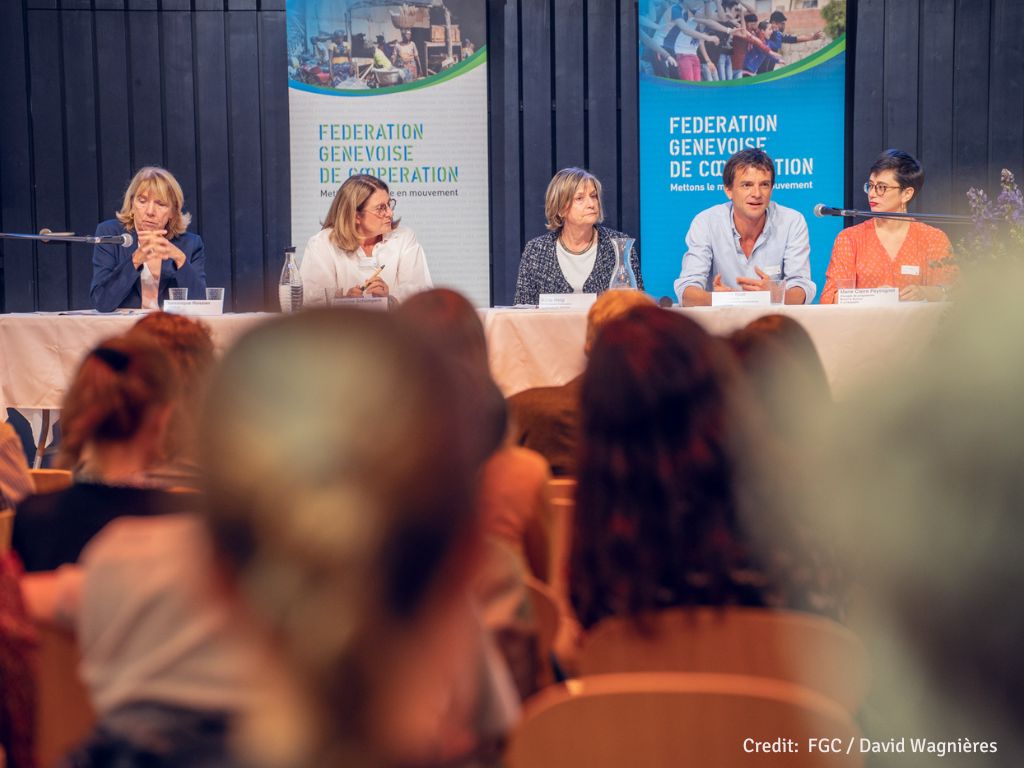
At the FGC Annual Conference, urbaMonde highlighted the importance of supporting sustainable and participatory housing models in Latin America.
Last Tuesday, 23 September 2025, urbaMonde took part in the Annual Conference of the Geneva Federation for Cooperation (FGC), held in Geneva. We coordinated and facilitated a stand together with three other organisations (Espace Femmes International, the Movement for International Cooperation and the Swiss Romande Health Centre), focusing on biodiversity protection and the fight against climate change. The cross-cutting theme selected was community-based territorial management.
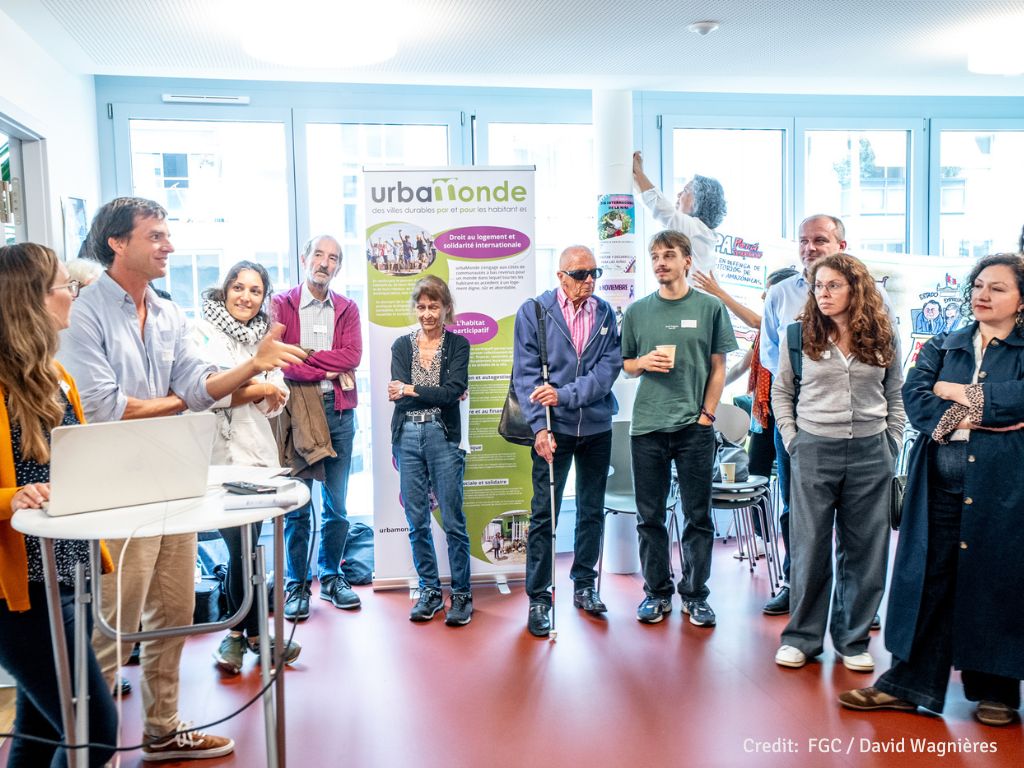
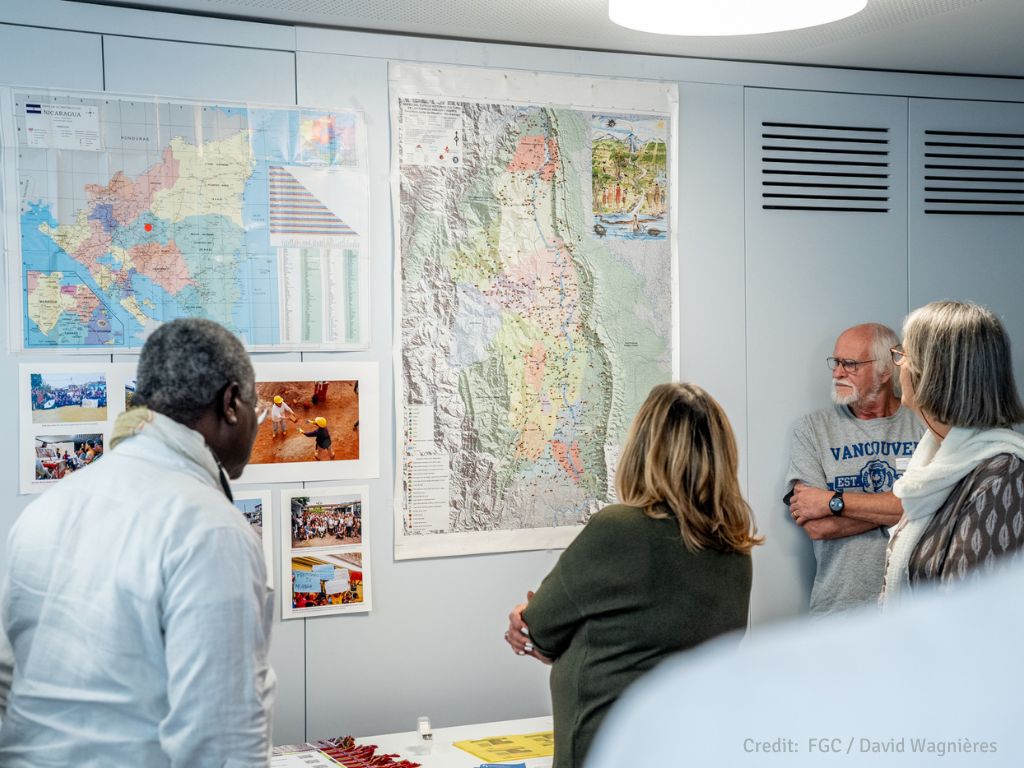
We presented our project supporting housing cooperatives in Nicaragua, whose main focus is to provide technical assistance to cooperatives currently being established and built in the Matagalpa region. These cooperatives are based on the principles of collective ownership, mutual support and self-management. By viewing housing as a common good, they make it possible to:
- reduce the impact of property speculation,
- strengthen community organisation,
- improve the environmental quality of the neighbourhoods developed in this way.
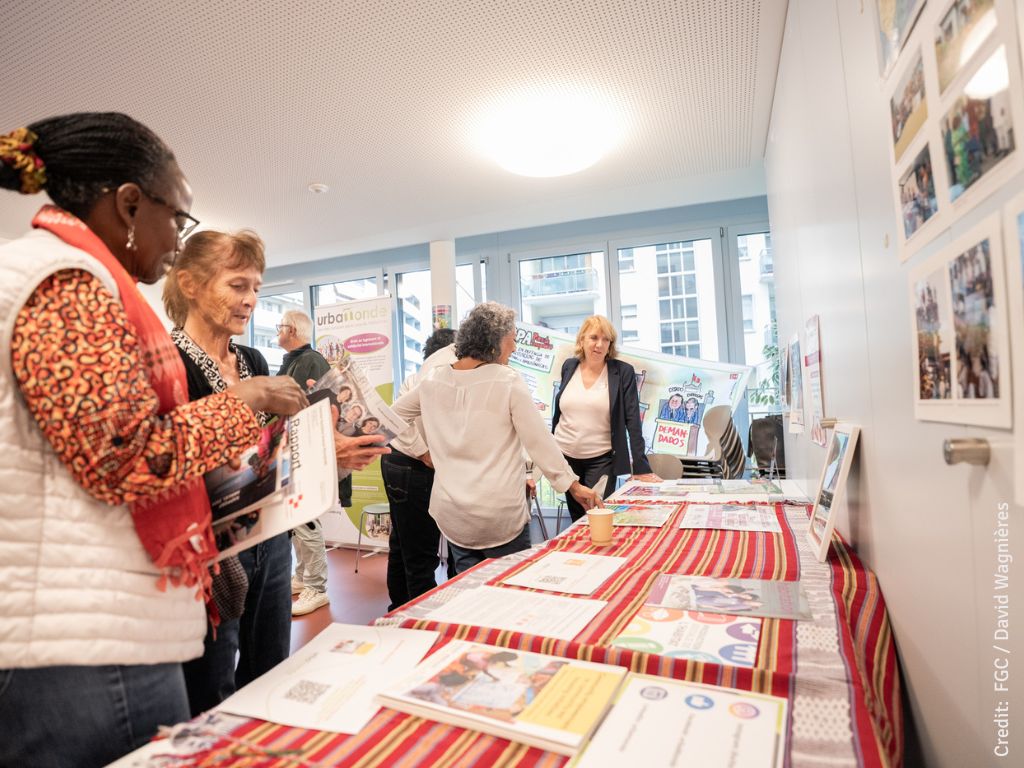
The process of individual and collective transformation observed within the cooperatives involved in the project demonstrates what underpins our conviction and our work: access to decent housing is a fundamental element of development, just as important as education and healthcare.
Unfortunately, this issue receives little recognition within Swiss development cooperation. The FGC is a welcome exception, which enables us to benefit from the support of the Canton and several municipalities in Geneva, whom we were able to thank on this occasion.
- To continue working with our partners in Latin America: public authorities in Geneva, the FDFA, and funding bodies must maintain and promote the autonomy of NGOs and local partners in Latin America, in order to preserve grassroots initiatives and their long-term impact. As the FGC points out, shifts in funding—particularly the redirection of resources towards other regions—weaken organisations working on the ground and threaten the sustainability of their projects.
- Promoting sustainable and participatory urban housing models: this principle is explicitly included in the FGC’s requirements as an essential element of development in the Americas. Our projects fully align with this approach: the housing designed by our partners is conceived as participatory (with residents making decisions, organising themselves and engaging in collective management) and sustainable (ecological, equitable and inclusive).